What are you looking for?
Search

Thymulin: Regulating Immune System Function
ALL ARTICLES AND PRODUCT INFORMATION PROVIDED ON THIS WEBSITE ARE SOLELY FOR INFORMATION DISSEMINATION AND EDUCATIONAL PURPOSES.
The products provided on this website are intended exclusively for in vitro research. In vitro research (Latin: *in glass*, meaning in glassware) is conducted outside the human body. These products are not pharmaceuticals, have not been approved by the U.S. Food and Drug Administration (FDA), and must not be used to prevent, treat, or cure any medical condition, disease, or ailment. It is strictly prohibited by law to introduce these products into the human or animal body in any form.
Overview
Thymulin is a neuroendocrine hormone initially referred to as “serum thymic factor” (FTS). It is primarily produced by thymic epithelial cells and exerts its biological effects in the body in a form bound to carrier proteins and zinc ions (Zn⊃2;⁺). As a peptide hormone, Thymulin plays an indispensable role in the immune regulation process of the body. The thymus plays a critical role in the development and maturation of the immune system, and as an important substance secreted by the thymus, the stability of Thymulin's function is crucial for maintaining normal immune status in the body. As age increases, the thymus gradually atrophies, and Thymulin secretion decreases accordingly, which is associated with the decline in immune system function. In the elderly, immune function generally decreases, and part of this may be related to reduced Thymulin secretion.

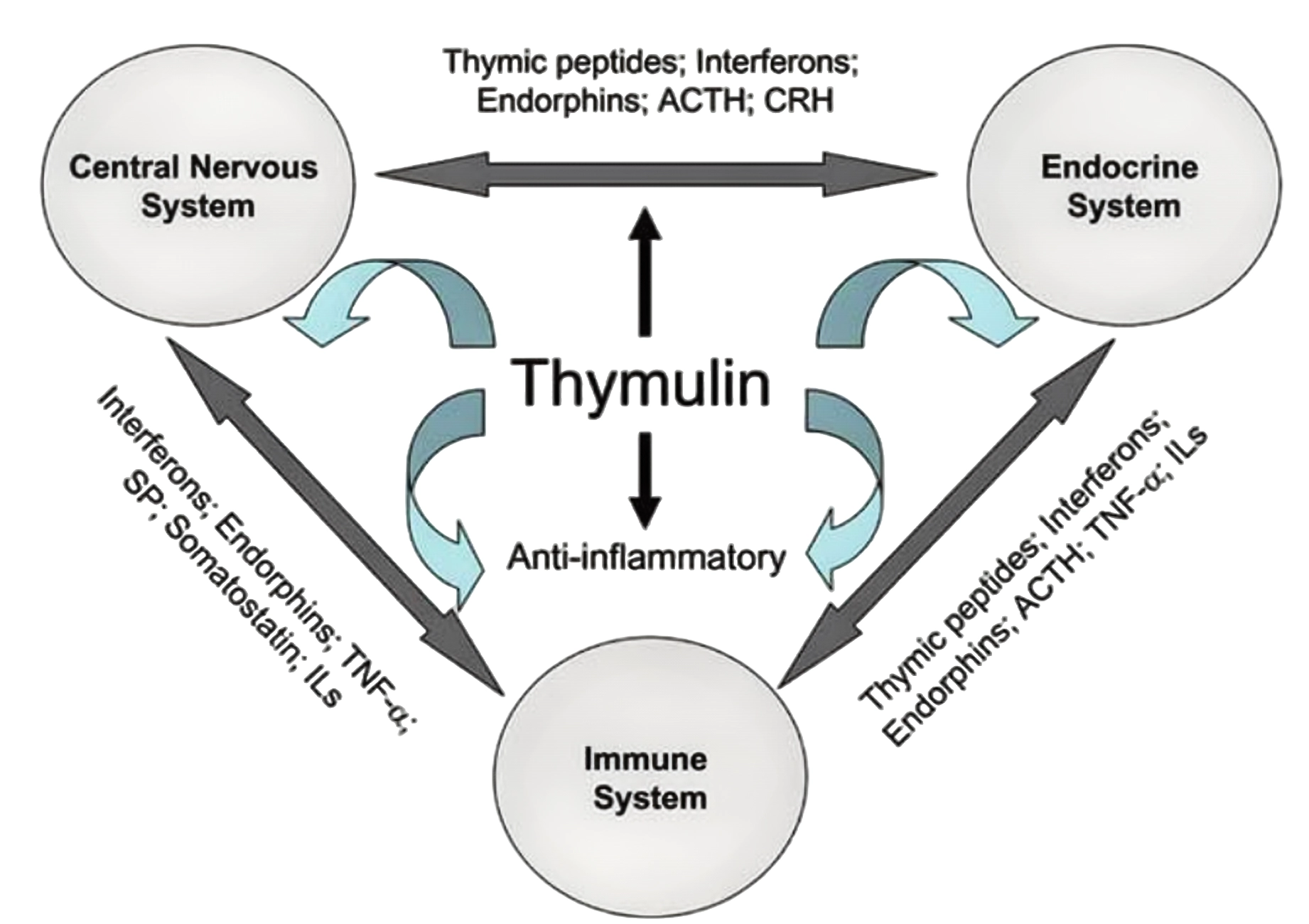
Figure 1 A schematic diagram of the role of thymulin in regulating neuro-immune endocrine actions.
Role in the Immune System
T lymphocyte differentiation: Thymulin is a key hormone in T lymphocyte differentiation. T lymphocytes play a crucial role in cellular immunity within the immune system, including identifying and eliminating cells infected by pathogens, tumor cells, and others. Thymulin plays a critical role in the gradual differentiation of T lymphocytes from progenitor cells in the thymus into mature T cell subsets with distinct functions, such as helper T cells (Th) and cytotoxic T cells (Tc). During this differentiation process, thymulin participates in regulating the expression of a series of genes, promoting T lymphocytes to acquire specific surface markers and functional characteristics, thereby enabling them to accurately recognize and respond to various antigenic stimuli.
Regulating the ratio of T helper cells to suppressor cells: Thymulin helps maintain the normal ratio between T helper cells and suppressor cells. T helper cells assist B lymphocytes in producing antibodies, enhance the phagocytic capacity of macrophages, and promote the proliferation and differentiation of T cells. Inhibitory T cells, on the other hand, suppress excessive activation of the immune response, preventing the onset of autoimmune diseases. Thymulin ensures the immune system can effectively combat foreign pathogens while avoiding excessive immune responses that could damage the body's own tissues by finely regulating the ratio of these two cell types. Abnormal thymulin levels may disrupt this balance, potentially leading to immune dysfunction, such as an increased risk of autoimmune diseases.
Anti-inflammatory effects: Thymulin exhibits significant anti-inflammatory properties. It can downregulate the release of inflammatory mediators, such as cytokines (e.g., tumor necrosis factor-α (TNF-α), interleukin-6 (IL-6), etc.) and chemokines, which play roles in recruiting immune cells and amplifying inflammatory signals during inflammatory responses. Thymulin can upregulate anti-inflammatory factors, such as interleukin-10 (IL-10), which inhibits the activation of inflammatory cells and the production of inflammatory mediators, thereby exerting anti-inflammatory effects. Thymulin can also regulate transcription factors and related signaling pathways to control the progression of inflammatory responses at the molecular level. In inflammatory states, such as in a rat model of inflammation induced by complete Freund's adjuvant (CFA), Thymulin treatment significantly reduced hyperalgesia and paw edema, while also decreasing CFA-induced microglia activation, phosphorylation of p38 mitogen-activated protein kinase (p38 MAPK), and production of pro-inflammatory cytokines in the spinal cord, indicating that it alleviates inflammatory responses by inhibiting the activation of spinal cord microglia and the production of central inflammatory mediators.
Regulation of phagocyte activity: In some experimental models, such as the BCG-induced mouse granuloma model, Thymulin 5CH treatment improved the granuloma inflammatory process. Specifically, it regulated the differentiation of local and systemic phagocytes, promoted the differentiation of peritoneal B1 stem cells into phagocytes, and reduced the number of infected phagocytes in the lesion, indicating that the infection is alleviated. Thymulin treatment also increases the number of B1-derived phagocytes, CD4⁺, and CD8⁺ T lymphocytes in local lymph nodes, suggesting that Thymulin not only influences phagocyte differentiation but also affects the migration of T cells to local lymph nodes, thereby enhancing local immune defense capabilities.
Applications
Treatment of inflammatory diseases: Given Thymulin's anti-inflammatory properties, it holds potential application value in the treatment of various inflammatory diseases. In studies on the treatment of chronic asthma, gene therapy was administered via inhalation of a plasmid expressing Thymulin. After the disease was fully stabilized, mice were given a single dose of treatment via tracheal administration. Twenty days later, key pathological features of asthma in the lungs, such as chronic inflammation, pulmonary fibrosis, and abnormal mechanical regulation, were normalized. Further tissue and cellular analyses confirmed that this therapeutic intervention was achieved through its anti-inflammatory and anti-fibrotic effects. In a mouse model of ovalbumin-induced allergic asthma treated with DNA nanoparticles carrying the Thymulin plasmid, a single-dose treatment was able to prevent pulmonary inflammation, collagen deposition, and smooth muscle hypertrophy, while improving pulmonary mechanics, thereby opening new avenues for the treatment of chronic asthma. In other inflammatory diseases such as rheumatoid arthritis and inflammatory bowel disease, although currently in the research stage, based on Thymulin's anti-inflammatory mechanism, it is anticipated that regulating Thymulin levels or mimicking its effects could alleviate inflammatory symptoms and control disease progression.
Immune-related diseases: For diseases caused by immune dysregulation, such as autoimmune diseases, Thymulin may also play a significant role. By regulating T lymphocyte differentiation and the ratio of T helper cells to suppressor cells, Thymulin may correct abnormal immune system activation and reduce damage to tissues and organs caused by autoimmune attacks. In some animal experiments, Thymulin has shown some improvement in certain autoimmune disease models.
Adjuvant therapy for infectious diseases: In infectious diseases, Thymulin can enhance the body's ability to clear pathogens by regulating immune system function. In viral infections, Thymulin can enhance the body's cellular immune response by regulating T lymphocyte function, thereby more effectively clearing virus-infected cells. Its anti-inflammatory effects also help reduce inflammation-induced tissue damage and prevent secondary harm caused by excessive inflammatory responses.
Conclusion
In summary, Thymulin plays a multifaceted role in immune system regulation and has significant applications in inflammatory diseases, immune regulation-related diseases, and infectious diseases.
Sources
[1] Bonamin L, Sato C, Santana F, et al. Differentiation and modulation of phagocyte activity in murine granuloma after treatment with thymulin 5cH[J]. International Journal of High Dilution Research - Issn 1982-6206, 2021,11:148.DOI:10.51910/ijhdr.v11i40.580.
[2] Da S A, de Oliveira G P, Kim N, et al. Nanoparticle-based thymulin gene therapy therapeutically reverses key pathology of experimental allergic asthma[J]. Science Advances, 2020,6(24):eaay7973.DOI:10.1126/sciadv.aay7973.
[3] Nasseri B, Zaringhalam J, Daniali S, et al. Thymulin treatment attenuates inflammatory pain by modulating spinal cellular and molecular signaling pathways[J]. International Immunopharmacology, 2019,70:225-234.DOI:10.1016/j.intimp.2019.02.042.
[4] Da S A, Martini S V, Abreu S C, et al. DNA nanoparticle-mediated thymulin gene therapy prevents airway remodeling in experimental allergic asthma[J]. Journal of Controlled Release, 2014,180:125-133.DOI:10.1016/j.jconrel.2014.02.010.
[5] Haddad J J E, E N E S, Garabedian B S. Thymulin: An Emerging Anti-Inflammatory Molecule[J]. Current Medicinal Chemistry - Anti-Inflammatory \& Anti-Allergy Agents, 2005,4:333-338. https://api.semanticscholar.org/CorpusID:55757311
[6] Haddad J, Saadé N, Safieh-Garabedian B. Thymulin: An Emerging Anti-Inflammatory Molecule[J]. Current Medicinal Chemistry - Anti-Inflammatory & Anti-Allergy Agents, 2005,4:333-338.DOI:10.2174/1568014054065195.
[7] Safieh B, Kendall M D, Norman J C, et al. A new radioimmunoassay for the thymic peptide thymulin, and its application for measuring thymulin in blood samples[J]. Journal of Immunological Methods, 1990,127(2):255-262.DOI:10.1016/0022-1759(90)90076-8.
Product available for research use only: