What are you looking for?
Search

The Role of Vilon in Regulating Energy Metabolism Pathways for Fatigue Resistance and Exercise Endur
ALL ARTICLES AND PRODUCT INFORMATION PROVIDED ON THIS WEBSITE ARE SOLELY FOR INFORMATION DISSEMINATION AND EDUCATIONAL PURPOSES.
The products provided on this website are intended exclusively for in vitro research. In vitro research (Latin: *in glass*, meaning in glassware) is conducted outside the human body. These products are not pharmaceuticals, have not been approved by the U.S. Food and Drug Administration (FDA), and must not be used to prevent, treat, or cure any medical condition, disease, or ailment. It is strictly prohibited by law to introduce these products into the human or animal body in any form.
1. Introduction
During exercise, fatigue often limits the improvement of exercise endurance. The normal functioning of energy metabolism pathways is crucial for maintaining exercise capacity. As a potential regulatory factor, the role of Vilon in energy metabolism pathways has gradually attracted attention.

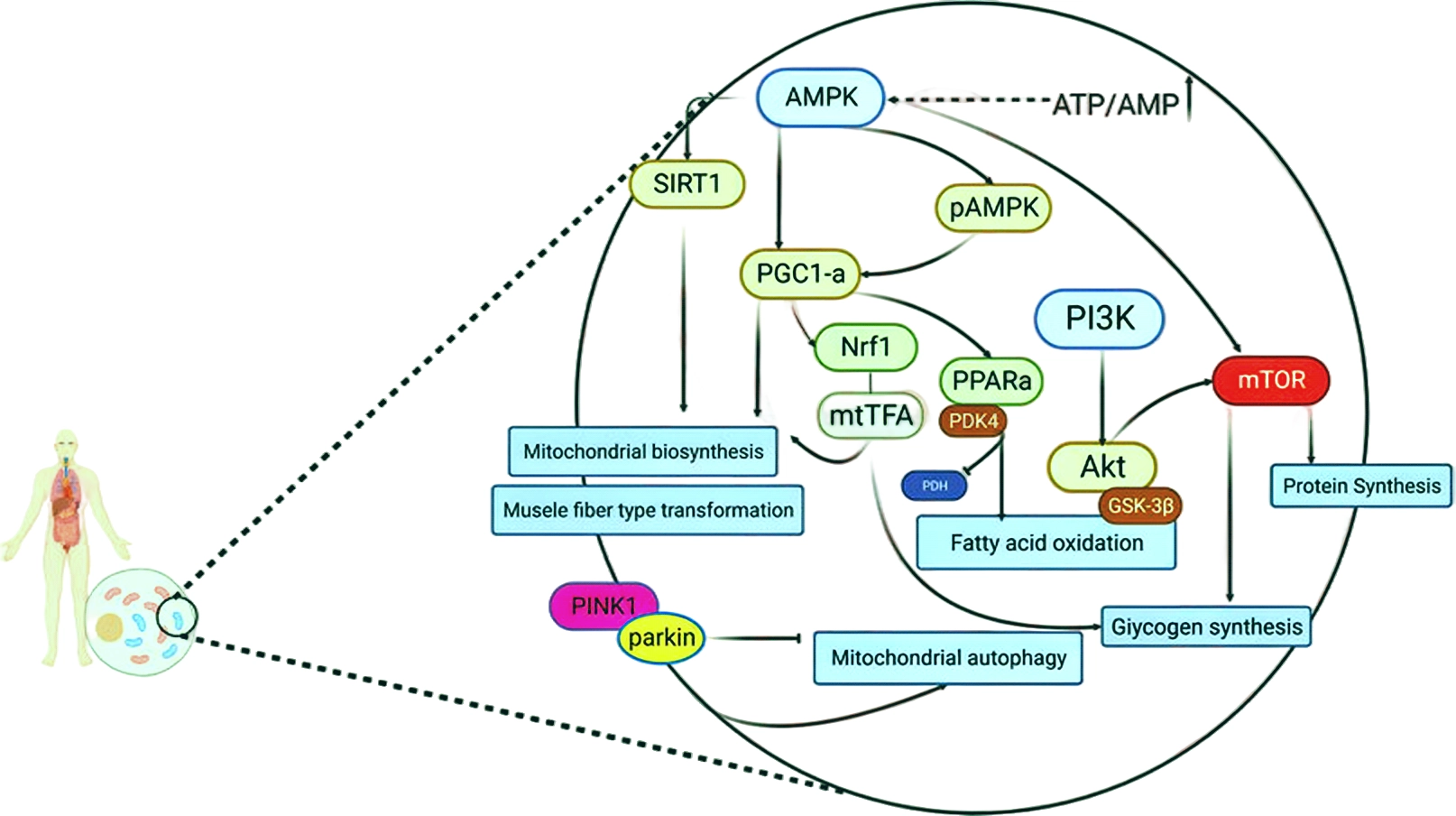
Figure 1 Energy metabolism is regulated through a signaling pathway consisting of AMPK and its downstream related factors.
2. The Relationship Between Energy Metabolism Pathways and Exercise Fatigue and Endurance
(1) Overview of Energy Metabolism Pathways
During exercise, the body's energy supply primarily relies on the metabolism of carbohydrates, fats, and proteins. Carbohydrate metabolism plays a key role in prolonged endurance exercise, providing energy through glycolysis and aerobic oxidation pathways. Fat metabolism serves as a sustainable energy source, helping to preserve limited carbohydrate reserves. Proteins also contribute a portion of energy during prolonged endurance exercise, accounting for approximately 10% of total ATP production.
(2) The Relationship Between Exercise Fatigue and Energy Metabolism
Prolonged exercise can lead to energy metabolism imbalances, such as decreased blood glucose levels and reduced glycogen reserves, accompanied by the accumulation of metabolic byproducts like lactic acid and blood ammonia. These changes can trigger exercise fatigue and reduce exercise endurance.
The Regulatory Role of Vilon in Energy Metabolism Pathways
(1) Vilon's Regulation of Carbohydrate Metabolism
Glycogen synthesis and breakdown: Vilon may influence glycogen synthesis and breakdown by regulating the activity of key enzymes such as glycogen synthase (GS) and glycogen phosphorylase. Before exercise, Vilon promotes glycogen synthesis, increasing glycogen reserves; during exercise, Vilon can appropriately regulate the rate of glycogen breakdown to ensure stable blood glucose supply. In mouse experiments, mice treated with Vilon exhibited more reasonable changes in glycogen content in muscles and liver before and after exercise, better maintaining energy requirements during exercise.
Glycolysis and aerobic oxidation: Vilon may influence the activity of key enzymes in the glycolytic pathway, such as phosphofructokinase (PFK), regulating the rate of glycolysis. Vilon may also participate in regulating the activity of enzymes related to the tricarboxylic acid cycle in aerobic oxidation, such as citrate synthase (CS), optimizing aerobic oxidation of carbohydrates for energy production and improving energy utilization efficiency.
(2) Regulation of Fat Metabolism by Vilon
Fatty acid mobilization and transport: Vilon may promote fatty acid mobilization in adipose tissue by regulating the activity of enzymes such as hormone-sensitive lipase (HSL). Vilon may also influence the expression of fatty acid transporters (FATP), accelerating the transport of fatty acids to muscle cells and providing more substrates for muscle oxidative energy production.
β-Oxidation: Within muscle cells, Vilon may regulate the activity of key enzymes such as carnitine palmitoyltransferase (CPT), promoting the β-oxidation of fatty acids, improving the efficiency of fat oxidation for energy production, reducing carbohydrate consumption, and thereby extending exercise endurance.
(3) Regulation of Protein Metabolism by Vilon
Although proteins account for a relatively small proportion of energy supply during exercise, Vilon may regulate related signaling pathways to reduce protein degradation, thereby maintaining muscle mass and function. Vilon may inhibit the activity of the ubiquitin-proteasome system, reducing muscle protein degradation, which helps maintain muscle contractility and alleviate exercise fatigue.
Vilon's Role in Regulating Energy Metabolism Pathways for Fatigue Resistance and Exercise Endurance Improvement
(1) Anti-fatigue Effects
Delaying Fatigue Onset: By regulating energy metabolism pathways, Vilon can maintain stable supply of energy substances such as blood glucose and glycogen, reduce the accumulation of metabolic byproducts, and thereby delay the onset of fatigue. In animal experiments, animals treated with Vilon exhibited a significantly delayed onset of fatigue during prolonged exercise.
Reducing fatigue severity: Individuals treated with Vilon exhibited lower levels of fatigue-related biochemical markers such as lactate and blood urea nitrogen (BUN) in their blood after exercise, indicating that Vilon can reduce the severity of exercise-induced fatigue and facilitate faster recovery.
(2) Enhancing exercise endurance
Extended exercise duration: Due to Vilon's optimized regulation of energy metabolism pathways, the body can utilize energy substrates more efficiently, thereby extending exercise duration. Multiple studies have shown that animals administered Vilon exhibited significantly increased exercise duration during exhaustive exercise.
Enhanced exercise intensity: Vilon not only extends exercise duration but also enhances exercise intensity to some extent. This may be because Vilon improves energy metabolism, enabling muscles to obtain sufficient energy supply during high-intensity exercise to maintain muscle contraction function.
Conclusion
Vilon plays a crucial role in fatigue resistance and exercise endurance enhancement through its multifaceted regulation of carbohydrate, fat, and protein metabolism within energy metabolic pathways. It can delay the onset of fatigue, reduce fatigue severity, while extending exercise duration and enhancing exercise intensity.
Sources
[1] Zhao R, Wu R, Jin J, et al. Signaling pathways regulated by natural active ingredients in the fight against exercise fatigue-a review[J]. Frontiers in Pharmacology, 2023,Volume 14 - 2023.DOI:10.3389/fphar.2023.1269878.
[2] Lee M, Hsu Y, Shen S, et al. A functional evaluation of anti-fatigue and exercise performance improvement following vitamin B complex supplementation in healthy humans, a randomized double-blind trial[J]. International Journal of Medical Sciences, 2023,20:1272-1281.
[3] Zhong H, Shi J, Zhang J, et al. Soft-Shelled Turtle Peptide Supplementation Modifies Energy Metabolism and Oxidative Stress, Enhances Exercise Endurance, and Decreases Physical Fatigue in Mice[J]. Foods, 2022,11(4).DOI:10.3390/foods11040600.
[4] Huang J, Tagawa T, Ma S, et al. Black Ginger (Kaempferia parviflora) Extract Enhances Endurance Capacity by Improving Energy Metabolism and Substrate Utilization in Mice[J]. Nutrients, 2022,14(18).DOI:10.3390/nu14183845.
[5] Alghannam A F, Ghaith M M, Alhussain M H. Regulation of Energy Substrate Metabolism in Endurance Exercise[J]. International Journal of Environmental Research and Public Health, 2021,18(9).DOI:10.3390/ijerph18094963.
[6] Xu X, Ding Y, Yang Y, et al. β-glucan Salecan Improves Exercise Performance and Displays Anti-Fatigue Effects through Regulating Energy Metabolism and Oxidative Stress in Mice[J]. Nutrients, 2018,10(7).DOI:10.3390/nu10070858.
Product available for research use only: