What are you looking for?
Search

The Role of Chonluten in Promoting Luteinizing Hormone Production in Reproductive Endocrine Regulati
ALL ARTICLES AND PRODUCT INFORMATION PROVIDED ON THIS WEBSITE ARE SOLELY FOR INFORMATION DISSEMINATION AND EDUCATIONAL PURPOSES.
The products provided on this website are intended exclusively for in vitro research. In vitro research (Latin: *in glass*, meaning in glassware) is conducted outside the human body. These products are not pharmaceuticals, have not been approved by the U.S. Food and Drug Administration (FDA), and must not be used to prevent, treat, or cure any medical condition, disease, or ailment. It is strictly prohibited by law to introduce these products into the human or animal body in any form.
Overview
In the reproductive endocrine system, Luteinizing Hormone (LH) plays a crucial role, finely regulating multiple stages of the reproductive process, from follicle development, ovulation, to corpus luteum formation and maintenance, each step requiring LH's involvement. Chonluten, as a substance closely associated with reproductive endocrine regulation, has garnered significant attention for its luteinizing hormone-stimulating effects. It can influence LH secretion, activity, and the physiological functions of related cells through specific mechanisms, thereby exerting a profound impact on the balance of reproductive endocrinology.

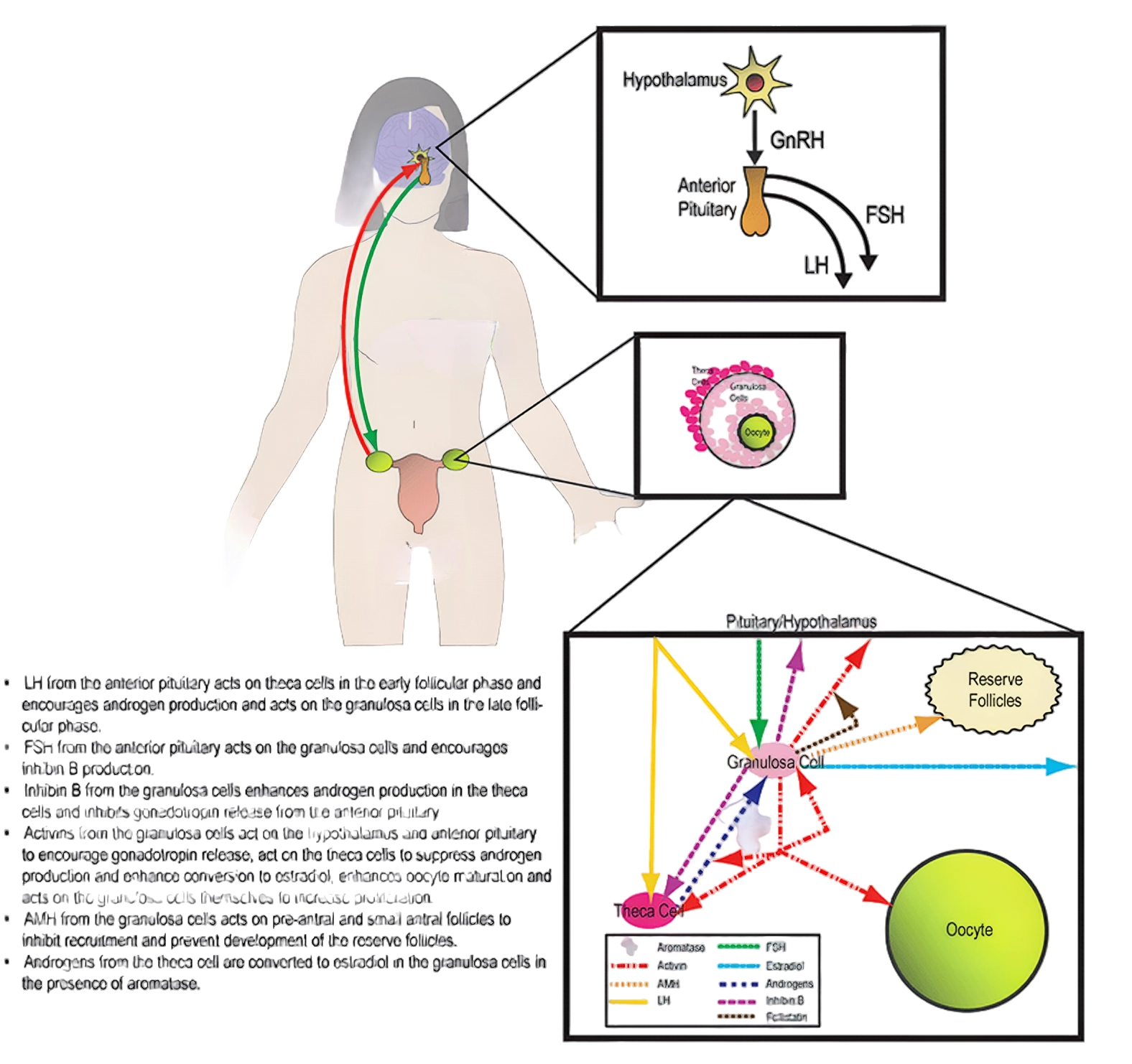
Figure 1 Schematic of the reproductive endocrinology in the female.
The Luteinizing Effect of Chonluten
Regulation of LH Secretion
Chonluten may act on the hypothalamic-pituitary axis, affecting the secretion and release patterns of gonadotropin-releasing hormone (GnRH). GnRH is the key hormone that stimulates the anterior pituitary gland to secrete LH and follicle-stimulating hormone (FSH). Chonluten may enhance the hypothalamus's synthesis and release of GnRH, thereby indirectly promoting the synthesis and secretion of LH by the basophilic cells of the anterior pituitary gland. In this way, Chonluten helps maintain stable LH levels in the body, providing an adequate hormonal foundation for subsequent luteinization processes. For example, in animal experiments, it was found that after Chonluten treatment, the mRNA expression level of GnRH in the hypothalamus increased, while the LH concentration in peripheral blood also rose accordingly, indicating Chonluten's positive regulatory effect on LH secretion.
Effects on theca cells and granulosa cells
During follicle development, theca cells and granulosa cells undergo a series of changes under LH stimulation, ultimately forming the corpus luteum. Chonluten enhances the effects of LH on these cells. It upregulates the expression of LH receptors (LHCGR) on the surface of theca cells and granulosa cells, making these cells more sensitive to LH. More LH receptors mean that cells can bind more LH, thereby initiating stronger intracellular signal transduction. Chonluten may directly participate in the regulation of intracellular signaling pathways, co-activating related protein kinases and transcription factors with LH to promote cell proliferation, differentiation, and steroid hormone synthesis. Studies have shown that Chonluten can enhance the expression of key enzymes involved in steroid hormone synthesis in LH-induced granulosa cells, accelerating the synthesis of steroid hormones such as progesterone, thereby providing the material basis for the formation and functional maintenance of the corpus luteum.
Promoting corpus luteum formation and functional maintenance
The corpus luteum is a vascular glandular structure formed rapidly from the follicle after ovulation, with its primary function being the secretion of progesterone, which is crucial for maintaining pregnancy. Chonluten promotes the action of LH, aiding in the rapid transformation of remaining granulosa cells and theca cells into corpus luteum cells after follicle rupture. It maintains the steroid hormone synthesis capacity of corpus luteum cells. During the early stages of corpus luteum formation, Chonluten synergizes with LH to stimulate corpus luteum cells to synthesize and secrete large amounts of progesterone, maintaining the growth and stability of the endometrium and creating an optimal environment for embryo implantation and early development. During the maintenance phase of the corpus luteum, Chonluten continues to act, ensuring that corpus luteum cells sustainably secrete sufficient progesterone to prevent miscarriages caused by progesterone deficiency. In in vitro experiments with luteal cells, the addition of Chonluten significantly enhances luteal cell viability and progesterone secretion, indicating its crucial role in maintaining luteal function.
Applications of Chonluten in Reproductive Endocrine Regulation
Applications in Assisted Reproductive Technology
In assisted reproductive technology (ART), such as in vitro fertilization-embryo transfer (IVF-ET), controlled ovarian hyperstimulation is a critical step. Chonluten can be used as an adjunct medication in combination with ovulation-inducing drugs to optimize the ovulation induction protocol. By enhancing the luteinizing hormone (LH)-induced luteinizing effect, it helps improve follicle development quality and ovulation rates, thereby increasing the number of high-quality embryos obtained. For patients with poor ovarian response, adding Chonluten to the standard ovulation induction protocol improves follicle development, normalizes serum LH levels, and enhances luteal function, thereby increasing the success rate of IVF-ET. Following embryo transfer, Chonluten can also be used to maintain luteal function, provide exogenous luteal support, reduce the risk of miscarriage, and improve clinical pregnancy rates.
Treatment of reproductive disorders
For reproductive disorders caused by abnormal LH secretion or insufficient luteal function, Chonluten has potential therapeutic value. Patients with polycystic ovary syndrome (PCOS) often exhibit abnormally elevated LH levels or disrupted LH/FSH ratios, which impair follicle development and ovulation, leading to infertility. Chonluten can regulate LH secretion and action to improve endocrine dysfunction, promoting normal follicle development and ovulation. In clinical studies, after administering Chonluten treatment to PCOS patients, their menstrual cycles improved, ovulation resumed, and some patients successfully conceived. For patients with recurrent miscarriages caused by luteal insufficiency, Chonluten can enhance luteal function, increase progesterone levels, effectively reduce the risk of miscarriage, and ensure the smooth progression of pregnancy.
Applications in animal reproduction
For certain economic animals, such as dairy cows and sows, improving reproductive efficiency is a key priority in livestock farming. Chonluten can be used to regulate animal reproductive endocrine function, promote ovulation and corpus luteum formation, and increase conception rates and litter sizes.
Conclusion
Chonluten plays a broad and significant role in promoting luteinization within reproductive endocrine regulation. From regulating LH secretion to promoting corpus luteum formation and maintaining its function, as well as its applications in assisted reproductive technologies, reproductive disease treatment, and animal reproduction, Chonluten holds significant importance.
Sources
[1] Li J, Wang W, Zhang D, et al. Research Progress on Luteinizing Hormone and Polycystic Ovary Syndrome[J]. Journal of Contemporary Medical Practice, 2024,6:117-121.DOI:10.53469/jcmp.2024.06(10).23.
[2] Przygrodzka E, Plewes M R, Davis J S. Luteinizing Hormone Regulation of Inter-Organelle Communication and Fate of the Corpus Luteum[J]. International Journal of Molecular Sciences, 2021,22(18).DOI:10.3390/ijms22189972.
[3] Roudebush W, Kivens W, Tubman J. Biomarkers of Ovarian Reserve[J]. Biomarker Insights, 2008,3:259-268.DOI:10.4137/BMI.S537.
Product available for research use only: