What are you looking for?
Search

Peptide Analysis: Structure, Function, and Applications
ALL ARTICLES AND PRODUCT INFORMATION PROVIDED ON THIS WEBSITE ARE SOLELY FOR INFORMATION DISSEMINATION AND EDUCATIONAL PURPOSES.
The products provided on this website are intended exclusively for in vitro research. In vitro research (Latin: *in glass*, meaning in glassware) is conducted outside the human body. These products are not pharmaceuticals, have not been approved by the U.S. Food and Drug Administration (FDA), and must not be used to prevent, treat, or cure any medical condition, disease, or ailment. It is strictly prohibited by law to introduce these products into the human or animal body in any form.
Overview
Peptides are an important class of biomolecules that play a significant role in the field of life sciences. From physiological regulation within organisms to practical applications across various industries, peptides demonstrate great potential and diversity.

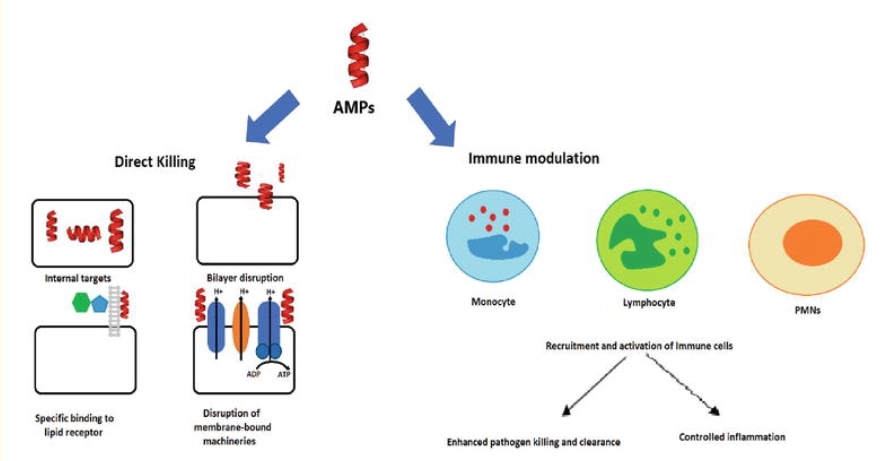
Figure 1. Mechanism of action of antimicrobial peptides.
Basic Concepts of Peptides
(1) Definition of Peptides
Peptides are compounds formed by amino acids linked via peptide bonds. A peptide bond is formed when the carboxyl group of one amino acid dehydrates and condenses with the amino group of another amino acid, thereby linking multiple amino acids to form a peptide chain. When the number of amino acids is small, it is called an oligopeptide; when the number of amino acids is large, it is called a polypeptide. In living organisms, many short peptides with specific functions, such as tripeptides and tetrapeptides, can precisely perform specific physiological tasks.
(2) Structure of Peptides
1. Primary Structure: This refers to the sequence of amino acids in a peptide chain, which is the basic structure of a peptide and determines its specificity and function. Different amino acid sequences confer distinct chemical properties and biological activities on peptides. Certain antimicrobial peptides have specific amino acid sequences that enable them to specifically bind to and disrupt bacterial cell membranes.
2. Secondary Structure: The local spatial structure formed by interactions such as hydrogen bonds within the peptide chain, including common structures like α-helices and β-sheets. These structures aid in further folding and stabilization of the peptide chain, playing a crucial role in its functional activity. In some protein segments, the formation of α-helices enhances the stability and functional activity of the protein.
3. Tertiary structure: The three-dimensional spatial structure formed by further folding and coiling of the peptide chain based on the secondary structure. The tertiary structure determines the overall shape of the peptide and the exposure of functional sites, which is crucial for interactions with other molecules. The tertiary structure of certain growth factor peptides determines their ability to bind to specific cell surface receptors, thereby initiating cell growth and differentiation signals.
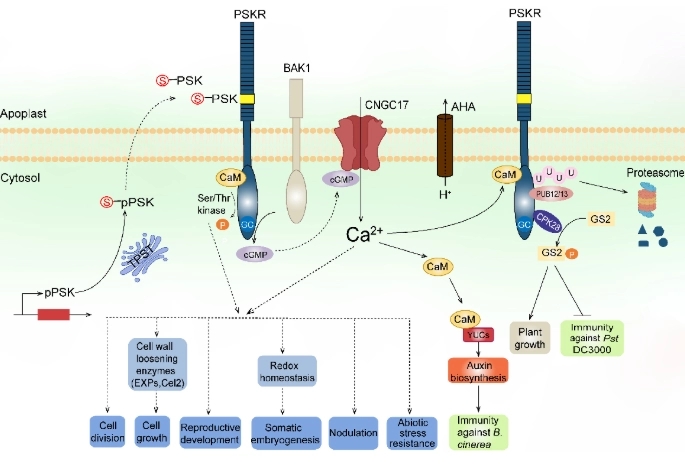
Figure 2 A working model of PSK biosynthesis, signaling, and functions. PSK precursors (pPSKs) undergo tyrosine sulfation (indicated by red S) catalyzed by a TPST in the cis-Golgi followed by proteolytic cleavage in the apoplast.
Classification of Peptides
(1) Classification by Source
1. Animal-derived peptides: derived from animal tissues and bodily fluids, such as casein peptides extracted from milk, which possess various physiological activities, including promoting calcium absorption and regulating immunity. The advantage of animal-derived peptides lies in their good compatibility with the human body, making them easily absorbed and utilized by the human body.
2. Plant-derived peptides: Extracted from plants, such as soy peptides and wheat peptides. Plant-derived peptides have the advantages of widespread raw material sources and lower costs, while also possessing various biological activities, such as antioxidant and blood pressure-lowering effects. Numerous studies have shown that soy peptides can lower cholesterol levels and benefit cardiovascular health.
3. Microbial-derived peptides: Produced through microbial fermentation, such as antimicrobial peptides produced by certain bacteria. Microbial-derived peptides have unique antimicrobial mechanisms and exhibit good inhibitory effects on drug-resistant bacteria, holding potential value in the pharmaceutical field.
(2) Classification by Function
1. Bioactive Peptides: These peptides possess multiple physiological regulatory functions, such as regulating blood pressure, blood sugar, and immunity. Angiotensin-converting enzyme inhibitors (ACEI peptides) can inhibit the activity of angiotensin-converting enzyme, thereby lowering blood pressure, and have significant therapeutic implications for patients with hypertension.
2. Antimicrobial Peptides: These peptides can inhibit or kill microorganisms such as bacteria, fungi, and viruses. They exist in nature and have unique mechanisms of action, such as disrupting the cell membrane structure of microorganisms to exert antimicrobial effects. In the field of biomedicine, antimicrobial peptides are considered potential drugs for addressing antibiotic resistance issues.
Functions of Peptides
(1) Regulation of Physiological Functions
1. Hormonal Regulation: Many peptide hormones play important regulatory roles in the body. Insulin is a peptide hormone secreted by pancreatic beta cells, which regulates blood glucose levels, promotes cellular uptake and utilization of glucose, and maintains stable blood glucose levels. If insulin secretion is insufficient or its function is abnormal, it can lead to elevated blood glucose levels and cause diabetes.
2. Neural Regulation: Neuropeptides play a role in information transmission and regulation within the nervous system. Endorphins have analgesic effects similar to morphine, binding to opioid receptors on the surface of neurons to alleviate the transmission of pain signals. Neuropeptides also participate in regulating physiological processes such as mood, sleep, and appetite.
(2) Participation in Immune Regulation
1. Enhancing Immune Cell Activity: Some peptides can stimulate the proliferation and differentiation of immune cells, enhancing their activity. For example, thymosin promotes the maturation and differentiation of T lymphocytes, enhancing the body's cellular immune function, and is commonly used in the treatment of patients with impaired immune function.
2. Regulating the secretion of immune factors: Peptides can regulate the secretion of various immune factors by immune cells, maintaining immune balance. Certain antimicrobial peptides can regulate the secretion of inflammatory cytokines, both enhancing the body's inflammatory response to defend against pathogen invasion and inhibiting excessive inflammatory responses in the later stages of inflammation to reduce tissue damage.
(3) Promoting material metabolism
1. Protein metabolism: Peptides participate in the synthesis and degradation of proteins. During protein synthesis, amino acids are connected by peptide bonds to form peptide chains, which are then assembled into proteins with specific functions. Proteases in the body can hydrolyze proteins into peptide segments, which are further broken down into amino acids, providing nutrition and energy for the body.
2. Fat Metabolism: Certain peptides can regulate the activity of enzymes involved in fat metabolism, influencing fat synthesis and breakdown. Some peptides can promote fatty acid oxidation, reducing fat accumulation in the body, and may have potential applications in the prevention and treatment of obesity.
Applications of Peptides
(1) Pharmaceutical Field
1. Drug Development:
Antimicrobial Drugs: Given the growing issue of antibiotic resistance, antimicrobial peptides have become a hotspot in the development of new antimicrobial drugs. Antimicrobial peptides exhibit excellent inhibitory effects against various drug-resistant bacteria and have unique mechanisms of action that are less likely to develop resistance. Antimicrobial peptides derived from frog skin have shown promising results in the treatment of skin infections and other conditions.
Other Drugs: Peptide-based drugs are also used to treat various diseases such as cardiovascular diseases and diabetes. Glucagon-like peptide-1 (GLP-1) analogues for treating diabetes can mimic the physiological effects of GLP-1, promote insulin secretion, lower blood glucose levels, and have the advantage of low hypoglycemia risk.
2. Drug carriers: Peptides can serve as drug carriers to enhance drug targeting and bioavailability. By linking drugs to peptides with targeting properties, drugs can be precisely delivered to the site of the disease, minimizing damage to normal tissues. Peptide carriers can also improve drug solubility and stability, enhancing therapeutic efficacy.
(2) Food Industry
1. Nutritional fortification: Peptides have excellent nutritional properties and are easily digested and absorbed, making them suitable as nutritional fortifiers in food. For example, adding casein peptides to infant formula can enhance the nutritional value of the formula and promote infant growth and development. For special populations such as the elderly and post-surgical rehabilitation patients, peptide-rich foods can provide easily absorbable high-quality protein to meet their nutritional needs.
2. Flavor Enhancement: Some peptides have unique flavors and can be used to improve the texture and flavor of food. Certain umami-rich peptides can enhance the umami flavor of food, thereby improving its quality. Additionally, peptides can serve as flavor enhancers, synergizing with other flavor compounds to elevate the overall flavor profile of food.
3. Preservation and Antimicrobial Properties: Antimicrobial peptides have the ability to inhibit microbial growth and can be used as natural preservatives in the food industry. Adding antimicrobial peptides to food can extend its shelf life, reduce the use of chemical preservatives, and enhance food safety. For example, incorporating antimicrobial peptides into meat products, dairy products, and other foods can effectively inhibit the growth of bacteria and mold, thereby maintaining food freshness.
(3) Agricultural field
1. Plant growth regulation: Plant-derived peptide hormones such as plant sulfonic peptides (PSKs) play an important role in plant growth, development, and immunity. PSKs can promote plant cell division and growth, regulate plant reproductive processes, and induce somatic cell embryogenesis. In agricultural production, exogenous application of PSKs or regulation of PSK levels within plants can enhance crop yield and quality.
2. Pest and Disease Control: Antimicrobial peptides can be used as biological pesticides for pest and disease control in crops. Compared to chemical pesticides, antimicrobial peptides offer advantages such as environmental friendliness and minimal residue. For example, certain insect-derived antimicrobial peptides can inhibit the growth of plant pathogens, providing effective control of crop diseases. Additionally, some peptides can disrupt the growth, development, and reproduction of pests, achieving pest control objectives.
(4) Cosmetics
1. Moisturizing and Repairing: Peptides have excellent moisturizing properties, increasing skin moisture content and maintaining skin hydration. Some peptides can also promote skin cell repair and regeneration, enhancing skin barrier function. Collagen peptides can replenish collagen in the skin, reducing the formation of wrinkles and making the skin firmer and smoother.
2. Whitening and Anti-Aging: Certain peptides can inhibit melanin synthesis, achieving a whitening effect. Glutathione can reduce melanin production by reducing the melanin precursor dopaquinone. Peptides also have antioxidant properties, helping to eliminate free radicals in the body, delay skin aging, and maintain a youthful appearance.
Current Status of Peptide Research
Current Research Status:Currently, significant progress has been made in peptide research. In basic research, understanding of peptide structure, function, and mechanisms of action continues to deepen. Through advanced biotechnologies such as genetic engineering and protein engineering, peptides can be efficiently synthesized and modified, opening up more possibilities for their application. In applied research, the use of peptides in fields such as medicine, food, and agriculture is expanding, with an increasing number of peptide-based products entering the market.
Conclusion
As an important class of biomolecules, peptides possess unique structures, diverse classifications, and broad functions. In numerous fields such as medicine, peptides have demonstrated significant application value.
Sources
[1] Li Y, Di Q, Luo L, et al. Phytosulfokine peptides, their receptors, and functions[J]. Frontiers in Plant Science, 2024,14. https://api.semanticscholar.org/CorpusID:266794980.
[2] Pashmforoosh N, Baradaran M. Peptides with Diverse Functions from Scorpion Venom: A Great Opportunity for the Treatment of a Wide Variety of Diseases[J]. Iran Biomed J, 2023,27(2 & 3):84-99.DOI:10.61186/ibj.3863.
[3] Singh T, Choudhary P, Singh S. Antimicrobial Peptides: Mechanism of Action[M]//Enany S, Masso-Silva J, Savitskaya A. Insights on Antimicrobial Peptides. Rijeka: IntechOpen, 2022.DOI: 10.5772/intechopen.99190.
[4] Kwatra B, Zafar J, Choudhary M, et al. ANALEPTIC APPLICATIONS OF PEPTIDES[J]. International Journal of Medical and Biomedical Studies, 2021,5.DOI:10.32553/ijmbs.v5i1.1671.
[5] Sultana A, Luo H, Ramakrishna S. Antimicrobial Peptides and Their Applications in Biomedical Sector[J]. Antibiotics-Basel, 2021,10(9).DOI:10.3390/antibiotics10091094.
[6] Fu Y, Amin M, Li Q, et al. Applications in nutrition: Peptides as taste enhancers[M]//2021:569-580.DOI: 10.1016/B978-0-12-821389-6.00014-5.
[7] van der Does A M, Hiemstra P S, Mookherjee N. Antimicrobial Host Defence Peptides: Immunomodulatory Functions and Translational Prospects[J]. Advances in Experimental Medicine and Biology, 2019,1117:149-171.DOI:10.1007/978-981-13-3588-4_10.