What are you looking for?
Search

Glutathione: Enhancing Antioxidant Capacity
ALL ARTICLES AND PRODUCT INFORMATION PROVIDED ON THIS WEBSITE ARE SOLELY FOR INFORMATION DISSEMINATION AND EDUCATIONAL PURPOSES.
The products provided on this website are intended exclusively for in vitro research. In vitro research (Latin: *in glass*, meaning in glassware) is conducted outside the human body. These products are not pharmaceuticals, have not been approved by the U.S. Food and Drug Administration (FDA), and must not be used to prevent, treat, or cure any medical condition, disease, or ailment. It is strictly prohibited by law to introduce these products into the human or animal body in any form.
Overview
Glutathione, also known as glutathione, is an important compound widely present in living organisms. It is a tripeptide composed of glutamic acid, cysteine, and glycine. It can be found in mammalian, plant, and numerous microbial cells, where it plays an indispensable role within cells. Glutathione is known as the “Master Antioxidant” due to its powerful antioxidant properties. This title stems from its high concentration within cells and its ability to work synergistically with other antioxidants to enhance their antioxidant effects.
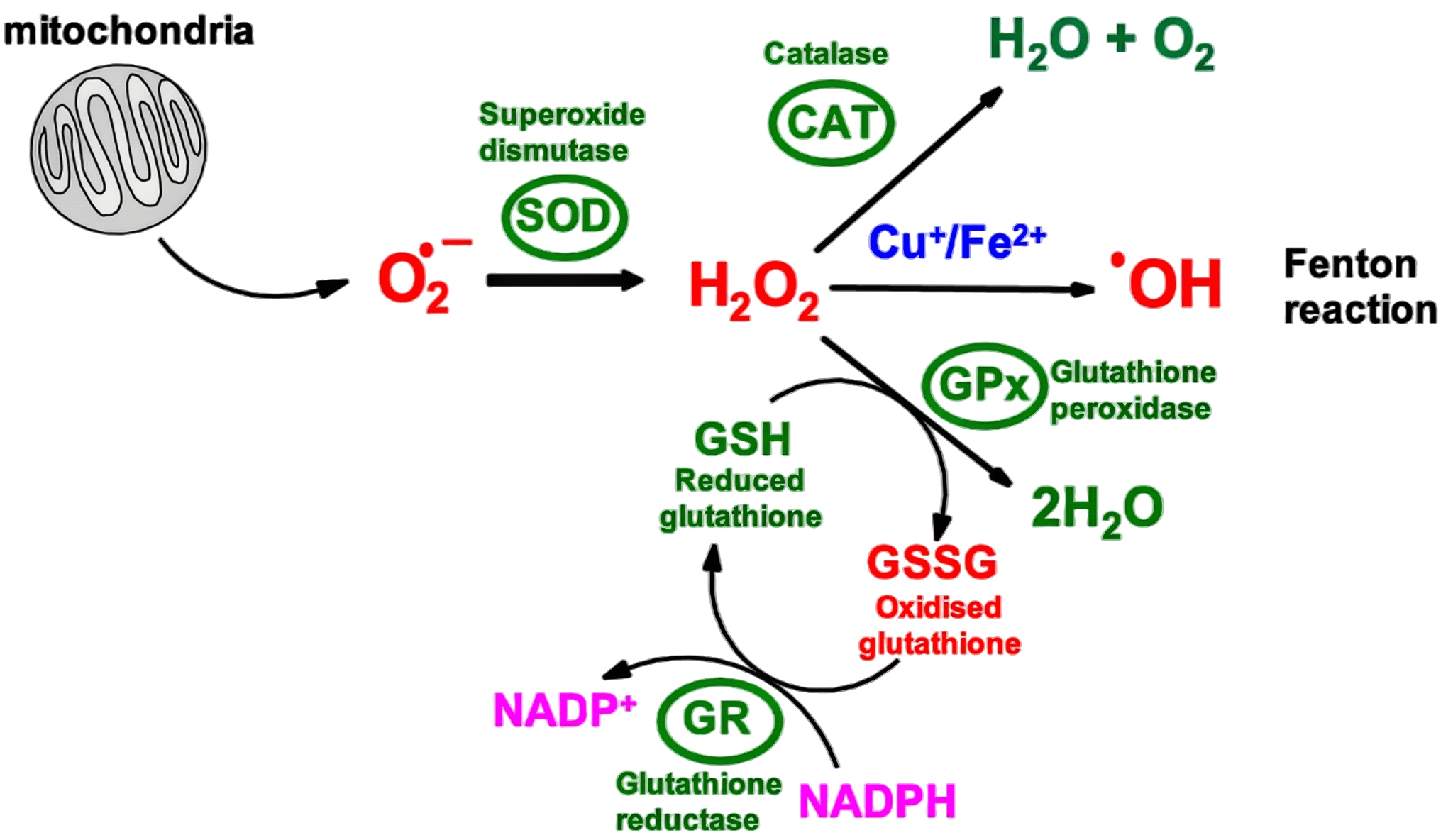

Figure 1 Concerted action of antioxidant enzymes superoxide dismutase, catalase, and glutathione peroxidase.
Functions
Clearing free radicals and protecting cells and mitochondria: Free radicals are highly reactive molecules produced during cellular metabolism. Excessive free radicals can cause oxidative and peroxidative damage to cells and mitochondria. Glutathione reacts with free radicals through its sulfhydryl (-SH) group, converting them into more stable substances, thereby preventing free radicals from attacking cells and mitochondria and maintaining the normal structure and function of cells. When cells are exposed to external stimuli such as ultraviolet radiation or radiation, a large number of free radicals are produced. Glutathione can rapidly respond to eliminate these free radicals, reducing the risk of cellular damage.
Participation in metabolic balance: Within bacteria, glutathione participates in redox reactions during metabolism. Through enzymatic reactions, it maintains balance within the body. This balance enables bacteria to directly or indirectly resist various changes caused by environmental factors and their own metabolism during growth, such as high oxygen levels, high osmotic pressure, drugs, and metal ions. When bacteria are in a high-oxygen environment, they produce large amounts of reactive oxygen species (ROS). Glutathione can reduce ROS through a series of reactions, enabling bacteria to survive in such environments.
Detoxification: Glutathione can bind with toxins, heavy metals, and other harmful substances within cells, converting them into non-toxic or low-toxic substances and promoting their excretion from the body. Under heavy metal stress, glutathione levels in plant cells increase. It forms complexes with heavy metals, reducing their toxicity to plant cells. Glutathione can also bind with toxic electrophilic substances to prevent damage to important biomolecules within cells (such as proteins and nucleic acids), thereby protecting cells from toxicity.
Enhancing immunity: Glutathione also plays a crucial role in the immune system. It can regulate the function of immune cells, enhance their activity, and thereby improve the body's immune function. It can influence the proliferation and differentiation of T lymphocytes and B lymphocytes, enabling the immune system to better recognize and eliminate foreign pathogens, and help the body resist infections and diseases.
Applications
Liver Protection: The liver is an important detoxification organ in the human body and is susceptible to damage from various harmful substances during metabolic processes. Glutathione enhances the liver's detoxification function and promotes the repair and regeneration of liver cells. Clinically, it is commonly used to treat various acute and chronic liver diseases, such as alcoholic liver disease and drug-induced liver injury. For alcohol-induced liver damage caused by long-term alcohol consumption, glutathione can reduce oxidative stress damage to the liver by scavenging free radicals, thereby improving liver function indicators.
Treatment of Endocrine Disorders: The normal functioning of the endocrine system is crucial for maintaining physiological balance in the human body. Glutathione can regulate the synthesis, secretion, and metabolism of hormones in the endocrine system, thereby exerting a therapeutic effect on diseases related to endocrine disorders. For example, in some thyroid diseases, glutathione may regulate the redox state within thyroid cells, thereby influencing the synthesis and release of thyroid hormones and improving the condition.
Adjuvant therapy for tumors: Tumor cells produce a large amount of free radicals during growth and proliferation. Additionally, chemotherapy drugs and radiation therapy used in tumor treatment can also increase oxidative stress in the body. Glutathione can be used as an adjunctive therapy to reduce the damage caused by chemotherapy and radiotherapy to normal cells, thereby improving patients' quality of life. It can scavenge free radicals, reduce oxidative stress damage to normal tissues, and enhance tumor cells' sensitivity to chemotherapy drugs by regulating intracellular signaling pathways, thereby improving treatment efficacy.
Skin whitening and care: Glutathione can inhibit tyrosinase activity, reduce melanin synthesis, and achieve skin whitening effects. Its antioxidant properties can eliminate free radicals in skin cells, delay skin aging, and reduce the appearance of wrinkles and age spots. Many skin whitening and anti-aging cosmetics contain glutathione components.
Repairing Damaged Skin: Skin exposed to UV rays, environmental pollution, and other factors may sustain damage. Glutathione promotes the repair and regeneration of damaged skin cells, strengthens the skin's barrier function, and improves overall skin health. For sunburned or allergic skin, skincare products containing glutathione can help alleviate symptoms and accelerate skin recovery.
Conclusion
In summary, glutathione, with its powerful antioxidant capacity and multiple important functions in the body, plays a significant role in various fields, including medicine.
Sources
[1] Jomova K, Alomar S Y, Alwasel S H, et al. Several lines of antioxidant defense against oxidative stress: antioxidant enzymes, nanomaterials with multiple enzyme-mimicking activities, and low-molecular-weight antioxidants[J]. Archives of Toxicology, 2024,98(5):1323-1367.DOI:10.1007/s00204-024-03696-4.
[2] Ivanov A A. Chapter 8 - Role of glutathione in enhancing metal hyperaccumulation in plants[M]//Hasanuzzaman M, Prasad M N V. Handbook of Bioremediation. Academic Press, 2021:115-152. https://doi.org/10.1016/B978-0-12-819382-2.00008-9.
[3] Perjesi P. Glutathione: Biosynthesis, Functions and Biological Implications[M]. 2019. ISBN: 978-1-53614-740-7.
[4] Sarvananda, Premarathna A D. Pharmaceutical and medicinal properties of glutathione: An Overview, 2019[C]. https://api.semanticscholar.org/CorpusID:199640213.
Product available for research use only: