What are you looking for?
Search

Cagrilintide for Glycemic Control and Weight Management in Patients with Type 2 Diabetes
ALL ARTICLES AND PRODUCT INFORMATION PROVIDED ON THIS WEBSITE ARE SOLELY FOR INFORMATION DISSEMINATION AND EDUCATIONAL PURPOSES.
The products provided on this website are intended exclusively for in vitro research. In vitro research (Latin: *in glass*, meaning in glassware) is conducted outside the human body. These products are not pharmaceuticals, have not been approved by the U.S. Food and Drug Administration (FDA), and must not be used to prevent, treat, or cure any medical condition, disease, or ailment. It is strictly prohibited by law to introduce these products into the human or animal body in any form.
1 Overview
Type 2 diabetes (T2D) is a common chronic metabolic disorder characterized by insulin resistance and insufficient insulin secretion, leading to elevated blood glucose levels. With the global rise in obesity rates, the incidence of T2D continues to increase. Weight management is critical in the treatment of T2D, as obesity often exacerbates insulin resistance and further impairs blood glucose control. Developing drugs that can effectively regulate blood glucose levels while aiding in weight management has become a research focus in the field of T2D treatment. Cagrilintide, as a novel drug, has increasingly drawn attention.

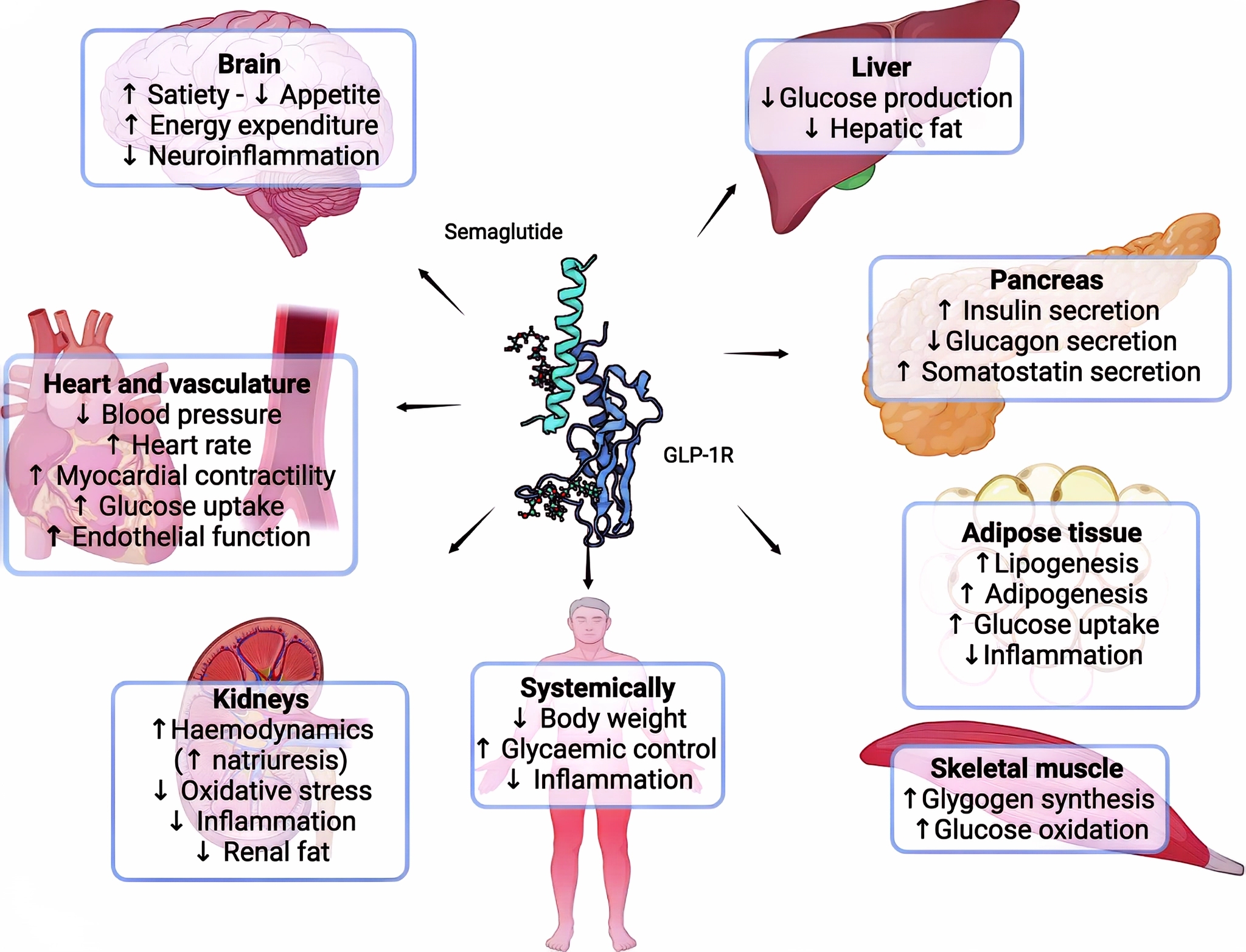
Figure 1 The diabetes- and obesity-related effects of GLP-1.
2 The Role of Cagrilintide in Blood Glucose Regulation
Regulatory Mechanism
Cagrilintide is a glucagon-like peptide-1 (GLP-1) analog. GLP-1 is an incretin hormone that plays a crucial role in blood glucose regulation. After food intake, intestinal endocrine cells secrete GLP-1, which stimulates insulin secretion in a glucose concentration-dependent manner, thereby lowering blood glucose levels. Cagrilintide has high affinity for GLP-1 receptors and can mimic the physiological effects of GLP-1. When blood glucose levels rise, Cagrilintide binds to the GLP-1 receptor, activating a series of intracellular signaling pathways that promote insulin synthesis and release, enabling glucose to enter cells for utilization and thereby lowering blood glucose concentrations. It also inhibits glucagon secretion and reduces hepatic glucose output, further stabilizing blood glucose levels.
Clinical efficacy
Multiple clinical studies have demonstrated that Cagrilintide exhibits excellent blood glucose regulation effects in patients with type 2 diabetes. In a randomized, double-blind, placebo-controlled clinical trial, T2D patients were divided into a Cagrilintide treatment group and a placebo group. After 12 weeks of treatment, it was found that patients in the Cagrilintide treatment group had a significant decrease in hemoglobin A1c (HbA1c) levels compared to baseline, with notable reductions in fasting blood glucose and postprandial blood glucose levels. HbA1c is an important indicator of long-term blood glucose control, and its decrease indicates that Cagrilintide can effectively and sustainably improve patients' blood glucose control. Compared to traditional antidiabetic drugs, Cagrilintide reduces blood glucose levels while posing a lower risk of hypoglycemia. This is attributed to its glucose concentration-dependent insulin secretion-promoting mechanism, meaning it only stimulates insulin secretion when blood glucose levels rise and does not excessively lower blood glucose levels when they are normal.
3 Mechanism of Action of Cagrilintide in Weight Management
Cagrilintide reduces food intake by suppressing appetite. It acts on the central nervous system, influencing the satiety center in the hypothalamus to induce a sense of fullness, thereby reducing food intake. Cagrilintide can delay gastric emptying, prolonging the time food remains in the stomach, further enhancing satiety, and reducing subsequent food intake. It may also influence fat metabolism by promoting fat oxidation and increasing energy expenditure, thereby aiding weight loss.
4 Application of Cagrilintide in the Treatment of Type 2 Diabetes
Indications
Cagrilintide is suitable for most patients with type 2 diabetes, especially those with overweight or obesity. For patients who have poor glycemic control despite diet and exercise and require concurrent weight management, Cagrilintide is an ideal treatment option.
Combination with Other Medications
Cagrilintide can be used in combination with various traditional antidiabetic drugs, such as metformin and sulfonylureas. Combination therapy can leverage the synergistic effects of different drugs to more comprehensively control blood sugar and weight. When used in combination with metformin, metformin primarily lowers blood sugar by improving insulin resistance and reducing hepatic glucose output, while Cagrilintide lowers blood sugar and weight through mechanisms such as promoting insulin secretion and suppressing appetite. The combination of the two can more effectively control blood sugar levels in T2D patients and further improve weight status without increasing the risk of adverse reactions such as hypoglycemia.
5 Conclusion
In summary, Cagrilintide, as a novel drug for the treatment of type 2 diabetes, demonstrates good efficacy in blood glucose regulation and weight management. Its mechanism of action makes it of significant application value in T2D treatment, providing a new treatment option for patients with type 2 diabetes.
Sources
[1] Abdulrahman A, Najjar S, Al-Zobaidy M. Effects of liraglutide on weight control and blood pressure in type 2 diabetes Effects of liraglutide on weight control and blood pressure in type 2 diabetes mellitus Iraqi patients[J]. Journal of the Faculty of Medicine, Baghdad, 2023,64:2022.DOI:10.32007/jfacmedbagdad.6441971.
[2] Kurtzhals P, Flindt Kreiner F, Singh Bindra R. The role of weight control in the management of type 2 diabetes mellitus: Perspectives on semaglutide[J]. Diabetes Research and Clinical Practice, 2023,203.DOI:10.1016/j.diabres.2023.110881.
[3] Shalahuddin I, Maulana I, Pebrianti S, et al. Blood Sugar Levels Regulation in Diabetes Mellitus Type 2 Patients Through Diet Management[J]. Jurnal Aisyah : Jurnal Ilmu Kesehatan, 2022. https://api.semanticscholar.org/CorpusID:251675212.
[4] McAdam-Marx C, Gaebler J A, Bellows B K, et al. Contemporary management of patients with Type 2 diabetes[J]. Expert Review of Cardiovascular Therapy, 2010,8(6):767-770.DOI:10.1586/erc.10.62.
Product available for research use only: