What are you looking for?
Search

ARA-290: For Inflammation Regulation
ALL ARTICLES AND PRODUCT INFORMATION PROVIDED ON THIS WEBSITE ARE SOLELY FOR INFORMATION DISSEMINATION AND EDUCATIONAL PURPOSES.
The products provided on this website are intended exclusively for in vitro research. In vitro research (Latin: *in glass*, meaning in glassware) is conducted outside the human body. These products are not pharmaceuticals, have not been approved by the U.S. Food and Drug Administration (FDA), and must not be used to prevent, treat, or cure any medical condition, disease, or ailment. It is strictly prohibited by law to introduce these products into the human or animal body in any form.
Overview
ARA-290 is an 11-amino acid linear non-hematopoietic polypeptide derived from erythropoietin (EPO). It exerts various biological effects by specifically binding to the innate repair receptor (IRR). Unlike EPO, ARA-290 retains the anti-inflammatory and tissue-protective functions characteristic of EPO.

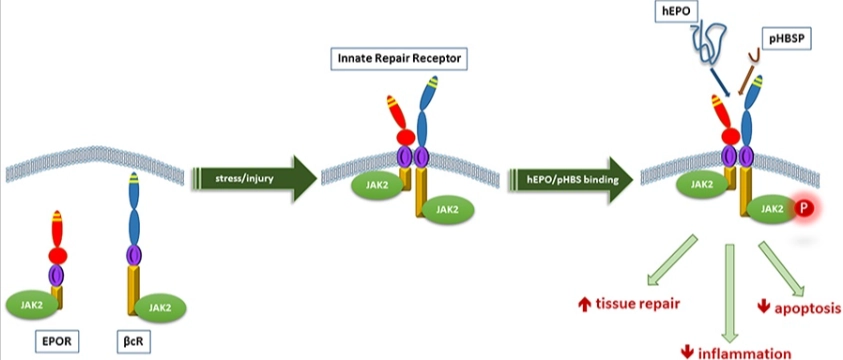
Figure 1 The biology of the innate repair receptor is characterized by the temporal and spatial separation of its receptor subunits, which associate to form the innate repair receptor and its endogenous ligand, hyposialated erythropoietin (hEPO).
Mechanism of Action
(1) Anti-inflammatory Effects
Inhibition of inflammatory cell activation: In various inflammatory models, ARA-290 demonstrates the ability to inhibit inflammatory cell activation. For example, in a mouse depression model induced by chronic stress, daily administration of ARA-290 reversed the increase in the frequency and/or number of CD11b⁺Ly6Gʰⁱ neutrophils and CD11b⁺Ly6Cʰⁱ monocytes in the bone marrow and meninges caused by chronic stress, while also reversing chronic stress-induced microglia activation, thereby improving depressive-like behavior in mice, with effects similar to those of fluoxetine.
Regulation of inflammatory factor secretion: ARA-290 effectively regulates the secretion of inflammatory factors. In a systemic lupus erythematosus (SLE) mouse model, ARA-290 reduced serum levels of inflammatory cytokines IL-6, MCP-1, and TNF-α, significantly suppressed serum antinuclear autoantibodies (ANAs) and anti-double-stranded DNA autoantibodies, reduced IgG and C3 deposition, and improved nephritis symptoms. In a cisplatin-induced nephrotoxicity model, pre-treatment with ARA-290 reduced levels of pro-inflammatory cytokines such as TNF-α, IL-6, and IL-1β, thereby alleviating inflammatory responses in renal tissue.
Inhibition of inflammatory signaling pathways: ARA-290 may exert its anti-inflammatory effects by inhibiting certain inflammation-related signaling pathways. Upon binding to IRR, it may influence a series of downstream molecular events associated with inflammatory responses, thereby blocking the transmission and amplification of inflammatory signals and ultimately alleviating inflammatory reactions.
(2) Immunomodulatory effects
Regulation of macrophage function: ARA-290 plays a significant regulatory role in macrophage function. In vitro experiments show that it can inhibit the inflammatory activation of macrophages while promoting their phagocytic function toward apoptotic cells. In a SLE mouse model, ARA-290 reduces the number of apoptotic cells in the kidneys by regulating macrophage function, which may be one of the key mechanisms underlying its improvement of SLE symptoms.
Influence on immune cell balance: In some disease models, ARA-290 may exert immune regulatory effects by modulating the balance between different immune cell populations. In a chronic stress-induced mouse depression model, ARA-290's regulation of specific immune cell populations in the bone marrow and meninges helps restore immune cell balance, thereby mitigating the impact of inflammatory responses on the nervous system and improving depressive-like behavior.
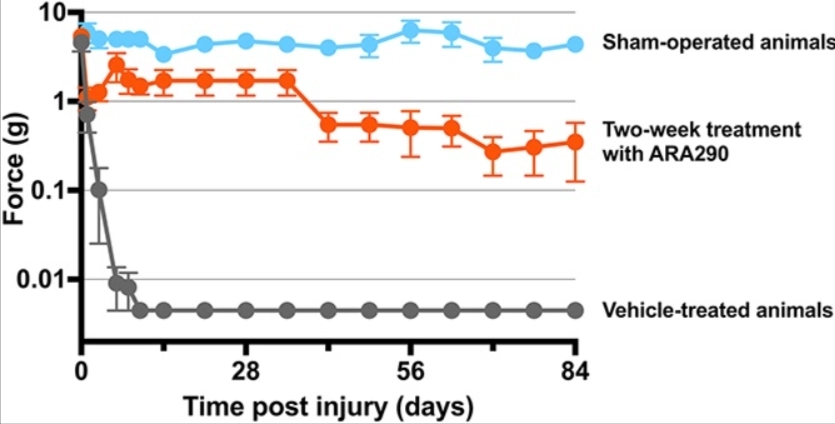
Figure 2 Activation of innate repair receptors reduces mechanical allodynia after spared nerve injury (SNI) in rats.
(3) Tissue protective effects
Promoting cell repair and regeneration: ARA-290 demonstrates the ability to promote cell repair and regeneration in various tissue injury models. In a diabetic foot ulcer (DFU) rat model, local application of ARA-290 significantly accelerates wound closure, increases collagen and protein content, and promotes skin wound repair. This is achieved by activating the IRR, which in turn initiates a series of intracellular signaling pathways, promoting cell proliferation, migration, and differentiation, ultimately leading to tissue repair.
Reducing oxidative stress damage: Oxidative stress plays a significant role in the development of many inflammation-related diseases. ARA-290 can reduce oxidative stress-induced damage to tissue cells. In studies on atherosclerosis (AS), ARA-290 can inhibit the production of reactive oxygen species (ROS) by macrophages under inflammatory conditions, reduce oxidative stress levels, and decrease damage to endothelial cells caused by oxidatively modified lipoproteins, thereby inhibiting the progression of AS. In a cisplatin-induced nephrotoxicity model, ARA-290 alleviates oxidative stress-induced kidney damage by increasing antioxidant enzyme levels, including glutathione peroxidase (GPx) and superoxide dismutase (SOD), and reducing malondialdehyde (MDA) and ROS levels.
Applications
(1) Neurological Disorders
Depressive Disorders: Studies in chronic stress-induced depression models showed that ARA-290 improved depressive-like behavior in mice, indicating its potential application in treating depressive disorders. The pathogenesis of depression is closely related to inflammatory responses, and ARA-290's anti-inflammatory and immunomodulatory effects may provide new strategies for depression treatment, potentially developing into a novel antidepressant drug.
Ischemic Stroke: In a middle cerebral artery occlusion (MCAO) mouse model, ARA-290 exhibited neuroprotective effects similar to those of erythropoietin (EPO), significantly reducing neuronal apoptosis and inflammatory cytokine levels in brain tissue. The neuroprotective effects of ARA-290 are mediated through the β-adrenergic receptor (βCR) and do not induce erythropoiesis. This provides new intervention targets and potential therapeutic drugs for the treatment of ischemic stroke.
(2) Autoimmune Diseases
Systemic lupus erythematosus (SLE): Studies in SLE mouse models indicate that ARA-290 significantly improves SLE symptoms, inhibits the production of autoantibodies, reduces kidney inflammation and damage, and does not stimulate hematopoiesis. Given the current limitations in SLE treatment, ARA-290 holds promise as a new candidate drug for SLE, offering patients more effective treatment options.
(3) Diabetes-related complications
Diabetic foot ulcers: In a rat model of diabetic foot ulcers, local application of ARA-290 effectively promotes wound healing, improves glucose and lipid metabolism, and reduces inflammatory factor levels. This suggests that ARA-290 has potential applications in the treatment of diabetes-related wound healing, offering new insights and approaches for the management of diabetic foot ulcers.
(4) Kidney diseases
Cisplatin-induced nephrotoxicity: In a cisplatin-induced nephrotoxicity model, ARA-290 alleviated cisplatin-induced kidney damage through its anti-apoptotic, anti-inflammatory, and antioxidant effects. This suggests that ARA-290 may serve as a new strategy for preventing and treating cisplatin-induced acute kidney injury, offering kidney protection for patients undergoing cisplatin chemotherapy.
(5) Cardiovascular diseases
Atherosclerosis: Both in vitro and in vivo experiments indicate that ARA-290 effectively inhibits inflammatory responses, reactive oxygen species production, apoptosis, migration, and foam cell formation in mouse macrophages, as well as the growth of plaque area in mouse aortas. This suggests that ARA-290 has potential application value in anti-atherosclerosis and may be developed into a novel drug for the prevention and treatment of cardiovascular diseases.
Conclusion
In summary, ARA-290, as a peptide with unique anti-inflammatory, immunomodulatory, and tissue-protective effects, has certain therapeutic potential in the treatment of various inflammation-related diseases.
Sources
[1] Wang R, Yang Z, Huang Y, et al. Erythropoietin‐derived peptide ARA290 mediates brain tissue protection through the $\beta$‐common receptor in mice with cerebral ischemic stroke[J]. Cns Neuroscience \& Therapeutics, 2024,30. https://api.semanticscholar.org/CorpusID:268414491
[2] Ghassemi-Barghi N, Ehsanfar Z, Mohammadrezakhani O, et al. Mechanistic Approach for Protective Effect of ARA290, a Specific Ligand for the Erythropoietin/CD131 Heteroreceptor, against Cisplatin-Induced Nephrotoxicity, the Involvement of Apoptosis and Inflammation Pathways[J]. Inflammation, 2023,46(1):342-358.DOI:10.1007/s10753-022-01737-7.
[3] Mashreghi M, Bayrami Z, Sichani N, et al. An in vivo investigation on the wound-healing activity of Specific ligand for the innate repair receptor, ARA290, using a diabetic animal model[M]. 2023.10.21203/rs.3.rs-2520194/v1.
[4] Xu G, Zou T, Deng L, et al. Nonerythropoietic Erythropoietin Mimetic Peptide ARA290 Ameliorates Chronic Stress-Induced Depression-Like Behavior and Inflammation in Mice[J]. Frontiers in Pharmacology, 2022,13:896601.DOI:10.3389/fphar.2022.896601.
[5] Huang B, Jiang J, Luo B, et al. Non-erythropoietic erythropoietin-derived peptide protects mice from systemic lupus erythematosus[J]. Journal of Cellular and Molecular Medicine, 2018,22(7):3330-3339.DOI:10.1111/jcmm.13608.
[6] Dahan A, Brines M, Niesters M, et al. Targeting the innate repair receptor to treat neuropathy[J]. Pain Reports, 2016,1(1):e566.DOI:10.1097/PR9.0000000000000566.
[7] Zhang W, Yu G, Zhang M. ARA 290 relieves pathophysiological pain by targeting TRPV1 channel: Integration between immune system and nociception[J]. Peptides, 2016,76:73-79.DOI:10.1016/j.peptides.2016.01.003.
Product available for research use only: